
Felhívás
A magyarországi kulturális örökség kiemelt jelentőségű részét gondozó numizmatika első hazai műhelye 1777-ben jött létre. Erre a nemes hagyományra büszkén emlékezve, 2018-ban egy olyan tudományos közösség született, amely immár hagyományt teremtve évről-évre megrendezi a Fiatal Numizmaták Konferenciáját.
A hetedik alkalommal megrendezésre kerülő Fiatal Numizmaták Konferenciájának (FNK) ezúttal a Nemzeti Közszolgálati Egyetem, Nemeskürty István Tanárképző Kar ad otthont.
A numizmatika helyzete hazánkban azért különleges, mert e fontos történeti segédtudománnyal foglalkozó fiatal kutatók eddig történeti, régészeti, művészet történeti, esetleg interdiszciplináris konferenciákon adhattak elő. Szándékaink szerint egy hiányzó szakmai közösséget hívtunk életre, ahol az ifjú kutatók szakmai segítséget, érdemi kritikát kaphatnak, így tudományos fejlődésüket senior kutatók segítik elő.
Az FNK célja egyrészt tematikus megnyilatkozási felületet nyújtani a pályájuk elején járó kutatóknak, másrészt elősegíteni az ígéretes tehetségek szakmai fejlődését. Célja továbbá az is, hogy a legújabb kutatási eredmények minél szélesebb körben váljanak ismertté és alkalmazottá. Szintén célként fogalmazódott meg, hogy az FNK teremtsen lehetőséget a múzeumbarát civil önkéntesek és a kutatók közötti párbeszédre. S ennek révén, az általuk talált legfrissebb, és általában közöletlen numizmatikai szakanyagok létezése kerüljön be a tudományos köztudatba.
Felhívjuk a jelentkezők figyelmét, hogy a megszerkesztett posztereket (pdf formátumban), illetve az absztraktokhoz tartozó képi illusztrációt (jpg formátumban) október 1-ig szíveskedjenek a konferencia email címére megküldeni (penztortenet@uni-nke.hu).
JELENTKEZÉSI HATÁRIDŐ: 2025. OKTÓBER 1.
Program
2025. NOVEMBER 24. – Ludovika Főépület – Széchenyi Díszterem
9:30–10:00: Köszöntő, megnyitó
Köszöntőt mond: Dr. Deli Gergely DSc, rektor (NKE), Dr. Veszelszki Ágnes, dékán (NKE NITK), Csóka Ferenc elnök (Magyar Éremgyűjtők Egyesülete)
Plenáris nyitóelőadás
10:00–10:45: Dr. Roman Zaoral PhDr, egyetemi adjunktus (Károly Egyetem, Prága):Images on 12th-century Bohemian denars and their transfer in Central Europe
10:45–11:00: Kérdések, hozzászólások
KÖZÉPKOR I. | SZEKCIÓELNÖK: Dr. KENYERES ISTVÁN PhD
11:10–11:30: Dr. Novák Ádám PhD: In 2025, Hungary celebrates the 700th anniversary of its gold coinage
11:30–11:50: Gálvölgyi Orsolya MA: The Buda mint and issues surrounding its autonomous coinage
11:50–12:10: Dr. Nagy Balázs PhD: Traces of regional currency use during the Mongol invasion and the Battle of Mohács
12:10–12:30: Rácz Laura MA: In the shadow of the Mongol invasion – numismatic significance of the treasure find of Ceglédbercel
12:30–12:50: Steuer István BA: The Jászjákóhalma–Négyszállási-tó coin hoard
12:50–13:10: Kérdések, hozzászólások
KÖZÉPKOR II. | SZEKCIÓELNÖK: Dr. NOVÁK ÁDÁM PhD
14:00–14:20: Bereková Veronika MA – Dr. Nagy Balázs PhD: Coin hoard consisting of Viennese denarii from Kincsesbánya (Fejér County)
14:20–14:40: Dr. Dmytro Yanov PhD – Fülöp Máté MA: Discovery of a Golden Horde Copper Coin in South-Eastern Hungary
14:40–15:00: Dr. Cristiana Tătaru PhD – Dr. Gabriel Custurea PhD: Modern Counterfeits of Medieval Moldavian Coinage: The Case of a Hoard after Stephen the Great
15:00–15:20: Dr. univ. Takács József: Methods of Coin Forgery and Their Detection
15:20–15:40: Varga Máté MA: Coin hoards from the early modern and modern periods in Somogy county
15:40–16:00: Kérdések, hozzászólások
Kiállításmegnyitó
Helyszín: Oktatási épület, aula (1083 Budapest, Üllői út 82.)
16:30: A Numizmatika és fémkeresés című kamarakiállítást megnyitja: Dr. Ringer István PhD, múzeumigazgató, régész (PIM – Kazinczy Ferenc Múzeum, Sátoraljaújhely)
2025. NOVEMBER 25. – Ludovika Szárnyépület – John Lukács Társalgó
ÓKOR | SZEKCIÓELNÖK: Dr. LÁNG ORSOLYA PhD
9:00–9:20: Anca Dumitru MA: The construction of value through coined silver in Antiquity: the case of the Stăncuța hoard
9:20–9:40: Németh Roland MA: Gods, Family Members, Power: Iconography and Propaganda on Coins of the Early Empire Period
9:40–10:00: Bedő István MA: The coin circulation of the Roman auxiliary camp in Albertfalva and its vicus
10:00–10:20: Kérdések, hozzászólások
ÚJKOR | SZEKCIÓELNÖK: Dr. univ. Garami Erika
10:40–11:00: Sajtos Anna MA: Exploring a Collector’s Network: Frigyes Déri and His Numismatic Purchase Log
11:00–11:20: Balla János MA: A Piarist Banknote Office? The Case of Móricz Schirkhuber, Piarist Procurator, and the Finances of the Order in Nineteenth-Century Hungary
11:20–11:40: Dr. Szabó Róbert PhD: Real competition or social exclusion? The motivation behind the awarding of merit medals at the Jesuit High School in Kalocsa
11:40–12:00: Szabó Kristóf MA: The diligent explorer of Hungarian numismatics – The life and work of József Weszerle
12:00–12:20: Vojtech Hami MA: The Kremnica Mint in 1945–1946
12:20–12:40: Justus Düren BA: Hitler’s coin collection / The „Sonderauftrag Münzkabinett”
12:40–13:00: Dombai István numizmatikai becsüs: Eternal Portrait, Fleeting Paper: Queen Elizabeth II on Banknotes
13:00–13:20: Kérdések, hozzászólások
ZÁRSZÓ
13:20: Dr. Kálnoki-Gyöngyössy Márton DSc, habilitált egyetemi docens, MTA doktora (NKE Nemeskürty István Tanárképző Kar)
Támogatók



Fővédnök
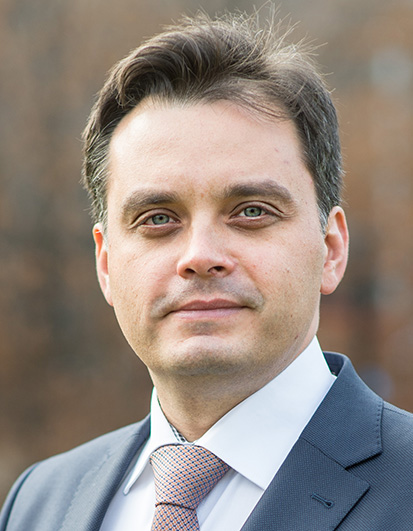
Dr. Latorcai Csaba PhD, területfejlesztési miniszterhelyettes (Miniszterelnökség)
Budapesten született 1976-ban, a Pázmány Péter Katolikus Egyetemen 2000-ben teológus, majd hittanári végzettséget, 2006-ban az Eötvös Lóránd Tudományegyetemen levéltáros, 2007-ben a Károli Gáspár Református Egyetemen jogász diplomát, 2006-ban pedig a Pázmány Péter Katolikus Egyetemen PhD fokozatot szerzett vallástudomány témában.
Jelenleg a Miniszterelnökség területfejlesztési miniszterhelyettese, emellett az Eszterházy Károly Katolikus Egyetemen, valamint a Gál Ferenc Főiskolán főiskolai tanárként végez oktatói tevékenységet.
Védnökök
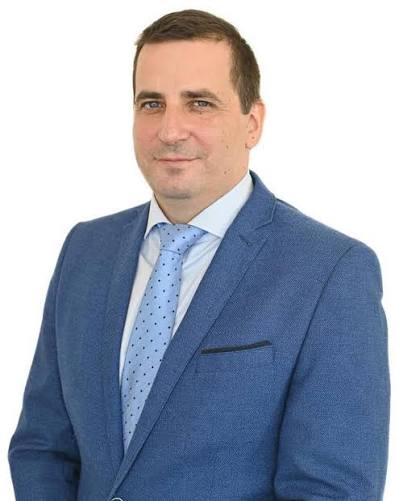
Dr. Deli Gergely DSc, rektor (Nemzeti Közszolgálati Egyetem)

Dr. Veszelszki Ágnes PhD, dékán (Nemzeti Közszolgálati Egyetem, Nemeskürty István Tanárképző Kar)
Szekcióelnökök

Dr. Kenyeres István PhD
Budapest Főváros Levéltára főigazgatója.
Kutatási területe a 15-18. századi Magyar Királyság és a Habsburg Monarchia gazdaság- és várostörténete, Budapest története. Egy monográfiája, 4 szerkesztett kötete, több mint 80 tanulmánya jelent meg magyar, angol és német nyelveken.Az ELTE BTK címzetes egyetemi docense, a Kodolányi János Egyetem címzetes egyetemi tanára, a BME Műemlékvédelmi szakmérnöki képzés oktatója. Oktatott tárgyak: történelem segédtudományai, levéltártudomány.
Dr. Novák Ádám PhD
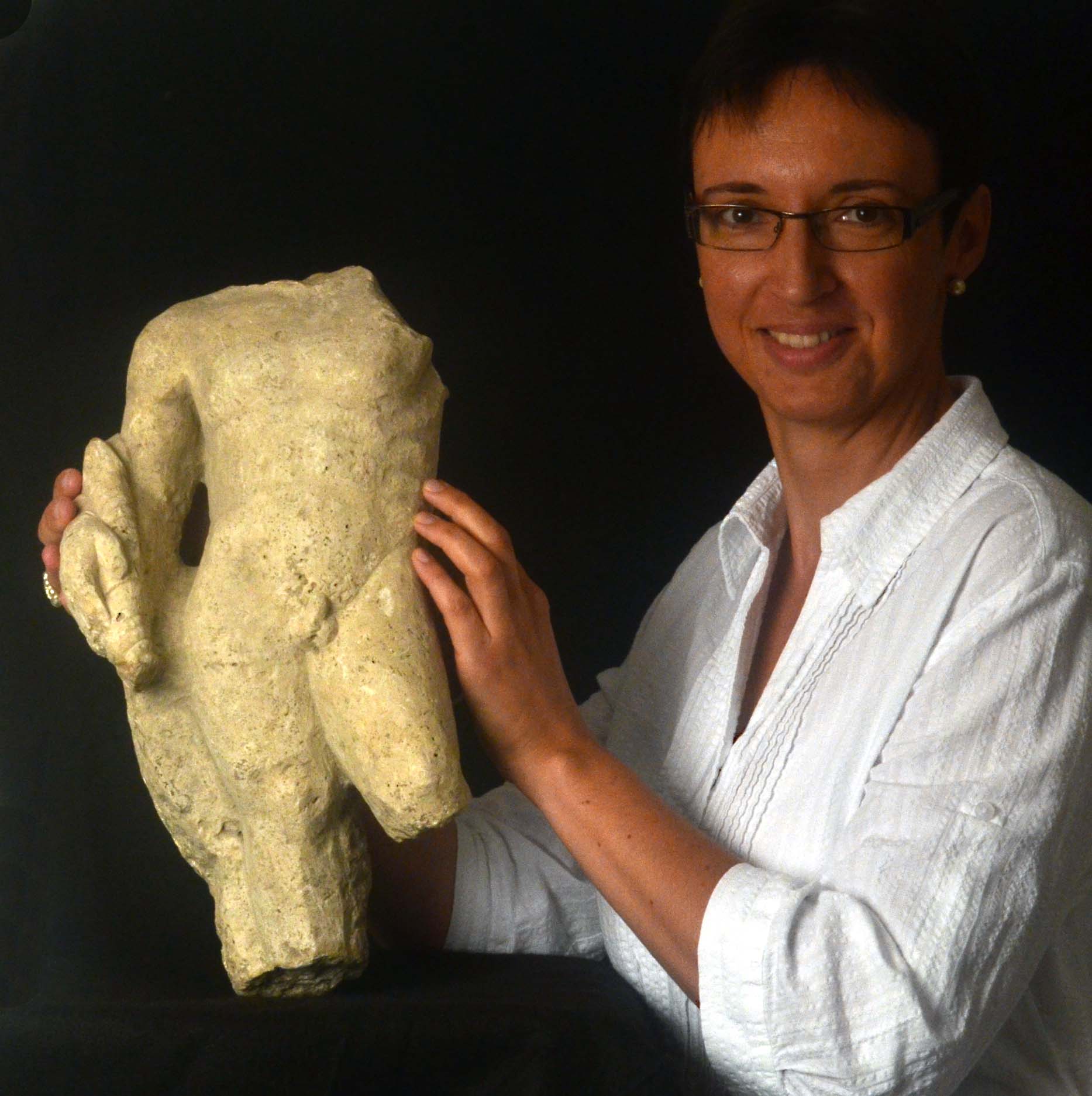
Dr. Láng Orsolya PhD

dr. Garami Erika
Az ELTE Bölcsészettudományi Karán végzett történelem – angol tanári szakon. Mintegy két évtizedig dolgozott muzeológusként előbb a Magyar Nemzeti Bank Bankjegy- és Éremgyűjteményében, majd a Postamúzeumban. Kutatási területe a 19–20. századi numizmatika és pénzügytörténet. Doktori disszertációját „Kossuth Lajos 1860–1861-es londoni pénzkibocsátási kísérlete” címmel írta. A Magyar Numizmatikai Társulat Réthy László-díjas tagja. Jelenleg Budapest Főváros Levéltár főlevéltárosa.
Szervezőbizottság
A SZERVEZŐBIZOTTSÁG ELNÖKE:
Dr. Kálnoki-Gyöngyössy Márton DSc, habilitált egyetemi docens, MTA doktora (Nemzeti Közszolgálati Egyetem Nemeskürty István Tanárképző Kar)
A SZERVEZŐBIZOTTSÁG TAGJAI:
Balla János doktorandusz (Nemzeti Közszolgálati Egyetem, Közigazgatás-tudományi Doktori Iskola)
Gálvölgyi Orsolya muzeológus (Budapesti Történeti Múzeum)
Dr. Nagy Balázs PhD muzeológus (Ferenczy Múzeumi Centrum, Szentendre)
Nagy Zsolt Dezső muzeológus (Damjanich János Múzeum, Szolnok)
Dr. Ringer István PhD, múzeumigazgató (Kazinczy Ferenc Múzeum, Sátoraljaújhely)
Varga Máté doktorandusz (Szegedi Tudományegyetem Történelemtudományi Doktori Iskola)
Absztraktok
IMAGES ON 12th-CENTURY BOHEMIAN DENARS AND THEIR TRANSFER IN CENTRAL EUROPE
Roman Zaoral PhDr
Recent discussions about knowledge transfer among die-sinkers in medieval Europe (A. Hylla et al.) have highlighted the exceptional quality of coin design and the wide array of new compositions and iconographic motifs produced in the mints of 12th-century Bohemia and Central Germany. Coins from this period display a notable variety of types, mainly due to the common practice of periodic recoinages (renovatio monetae). The marked improvement in the quality of coin dies, which boosted the prestige of the Přemyslid dynasty, was influenced by increasing political and trade links with Byzantium during the Crusades to the Holy Land.
A significant temporal link exists between the return from the first victorious expedition in 1099 and the high-quality coin minting at the Prague Mint in the same year. This connection becomes clear when comparing coin types Cach 388 and Cach 390 with Cach 389, minted at the end of Duke Břetislav II’s reign (1092–1100). Notably, high-quality dies of this type were only produced in Constantinople and southern Italy at the time, suggesting that the creator of these coins likely came to Prague from one of these regions. The need to promote images reinforcing Christian identity increased during the Crusades, making coins effective tools for this purpose due to their widespread circulation. Duke Břetislav II, whom the chronicler Kosmas described as a key supporter of Christianity, presumably supported these efforts. Instead of simply featuring basic Christian symbols, new designs appeared on coins, including equestrian scenes, portrayals of combat, and biblical illustrations. These coins depicted the struggle between good and evil, threats faced by believers, and divine protection, showing fighting knights, attacking predators, and assisting angels.
During the 12th century, the growth of a coin-based economy led to the establishment of mints as significant economic institutions, employing individuals with various skills. The similar techniques used in production, such as engraving and hallmarking, highlight a connection between minting and goldsmithing. Die-sinkers typically received their training in goldsmith or silversmith workshops and often worked on commission alongside a network of collaborators. In this arrangement, part of the coin’s design was created in one workshop, while the remaining elements were completed in another. This practice is documented in the 12th century by the mintmaster Luteger, who operated across eight mints in Hesse and Thuringia.
Motifs for images drew inspiration from related spheres, such as ancient gems, seals, dice, and other miniature artefacts. At some point, a key master’s workshop developed a new form of an older scheme, which was then imitated until a new prototype emerged. The link between coin images and seals has been repeatedly demonstrated; seal images served as templates for creating dies for specific coin issues, and the same hallmarking techniques were employed.
An intriguing question is how freely the goldsmith could design the coin image. Aside from the direct involvement of medieval rulers in the conceptual design of dies and pictures based on late Roman and Byzantine coins, examples of designs inspired by domestic tradition are also documented. For instance, both motifs on the obverse and reverse of the Cach 424 denar (bust in a frame/angel with a soul) have their prototypes in ancient minting, and the motif of the bride’s abduction on the Cach 549 denar is probably the original work of the creator working at the Prague Mint.
Czech numismatists agree that until the 1080s, images and inscriptions on coin dies were created using punches. Later, engraving replaced this technique, allowing craftsmen to showcase their skills. This shift made Bohemian denars notable examples of Romanesque metalwork on a European scale. It is also evident that this change in technique influenced coin imagery, as inscriptions continued to be punched for efficiency.
Symbols on coins and seals formed part of a broader strategy aimed at identifying, controlling, and ultimately rejecting and eliminating otherness. They embodied the medieval concept of identity, characterised by the perfect interplay between the original, its image, and the repeatable form, which—according to contemporary ideas—bestowed divine qualities. Furthermore, the need to copy certain coin types had economic motivations: these denominations featured images popular in trade.
A distinctive feature of Bohemian denars iconography is the ‘Bohemianisation’ of their pictorial motifs: St Wenceslas, as the patron saint of the country (e.g., Cach 413), appears instead of God on Byzantine coins (e.g., Hendy 4.3). In several issues, creators deliberately omit saintly or royal attributes from the figures on the obverse and reverse sides, creating an ambiguous coin image that could relate both to the duke’s life and the patron saint of the land. Therefore, I believe only some coin images can be connected to specific historical events; most primarily represent an idealised image of the ruler and his self-presentation, reflecting broader Christian ideas that facilitated their use in other countries as well. However, the reasons for transferring pictorial motifs varied. The impulse to imitate was driven by trade connections, whereas the use of the same hallmarks of inner images, or modifications of hallmarks or dies at foreign mints, was based on personal ties between mints that were interconnected on technical, artistic, and administrative levels.
Several examples document the adoption of pictorial motifs. For instance, coins minted in Prague (Cach 540), Olomouc (Cach 480), Kraków (Kopicki 49a), Regensburg (Emmerig 60), and Neunkirchen (CNA B 34) depict the ancient hero Hercules fighting the Nemean lion. The differences lie in design quality and flan size: fine features on the small die of Bohemian denars—around 15 mm in diameter—contrast with the coarser coinage from the much larger Regensburg die that reached up to 25 mm. Another example involves the pictorial motifs on the obverses of two Bohemian denars, Cach 424 from 1118–1120 and Cach 549 from 1120–1125, which appeared on both sides of a later Austrian pfennig from the 1130s.
Documented cases also exist where coin hallmarks were used to decorate non-coin artefacts. One such artefact is a headdress from České Budějovice (Budweis), crafted from thin silver sheet metal in the shape of a Byzantine stemma. One of its motifs appears on Vladislav II’s denar from 1158–1172 (Cach 614). It remains an open question why the quality of Bohemian denars declined in the latter half of the 12th century. Could this have been linked to the departure of a skilled die-sinker with the Přemyslid Adalbert III to Salzburg in 1268, as his archbishop’s coins might suggest?
A PIARIST BANKNOTE OFFICE? The case of Móricz schirkhuber, piarist prourator, and the finances of the order in nineteenth-century Hungary
Balla János
The nineteenth-century Piarists in Hungary deserve attention not only as educators but also as financiers. In this paper, I analyse a hitherto unknown manuscript ledger of 1870, compiled by Móricz Schirkhuber (1807–1877), the order’s versatile economic administrator. The text is far more than a dry account book: it is a financial autobiography, revealing how a Catholic teaching order attempted to operate within modern bourgeois money markets—managing loans, consolidating debts, running a central treasury, and provisioning its houses—amid recurrent crises and persistent internal frictions.
According to this source, the Piarists evolved into something akin to a “bank office”: they extended credit to their own members, to their houses, and at times even to sluggish state officials, while constructing a centralised mechanism to supervise provincial treasuries. The style and structure of the ledger show that its author approached finance not merely with practical prudence but with a touch of theoretical ambition. At once retrospective and prescriptive, the manuscript offers a rare insight into the economic practices of a nineteenth-century religious order.
Schirkhuber himself led a richly varied career: he taught in several gymnasia, served as rector in Vác, Veszprém and Pest, and in 1859 was elected a corresponding member of the Hungarian Academy of Sciences. From 1864 until his death he acted as assistant and later procurator of the Hungarian province, and at the time of compiling the manuscript was entrusted with the management of its entire fortune.
By presenting this forgotten source and its little-known author, the paper sheds light on the sober fact that behind the Piarist ideal of education lay a thoroughly professional—and deliberately structured—financial administration.
THE COIN CIRCULATION OF THE ROMAN AUXILIARY CAMP IN ALBERTFALVA AND ITS VICUS
Bedő István
My following study will examine the coin circulation of the Roman auxiliary camp in Albertfalva and its vicus. This is a very important site on the Ripa Pannonica. According to the literature the existence of the garrison and site has begun in the Flaivan period, rebuilt to stone during the 2nd century and ended in the middle of the 3rd century. The camp was excavated in 1950, 1952, 1957, 1958, 1971 and in 2008. The vicus militaris was under excavation in 1990, 1994, 2003, 2004, 2006 and in 2008. From these found the archaeologists altogether 90 coins, 57 from the garnizon, 33 from the settlement (from them were 2 17th century coins, without connection to the site). My study tries to interpret the results of the type, mint and time distribution of the currencies from 1st century AD, until the 3rd/4th century AD. This can help us to understand the coin use of auxiliary troops and the speciality of the Ripa Pannonica from numismatical site. I try to show also the similarities and differences of the coin-circulation in the camp and in the settlement. Beside these facts I try to reconstruct the context of the coins, inside of the camp and of the settlement. From the side of their context the study will reconstruct their layers too, because this can show, when the coins would be actually lost. The present study wants to birng our numismatical knowledge about Pannonia and the coin use of Roman frontier in a new light.
Coin hoard consisting of Viennese denarii from Kincsesbánya (Fejér County)
Bereková Veronika – Dr. Nagy Balázs
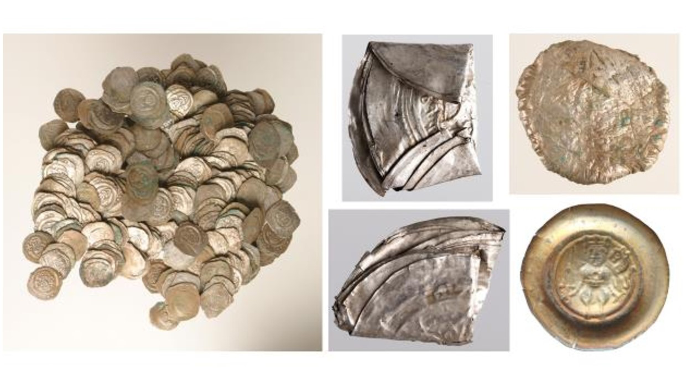
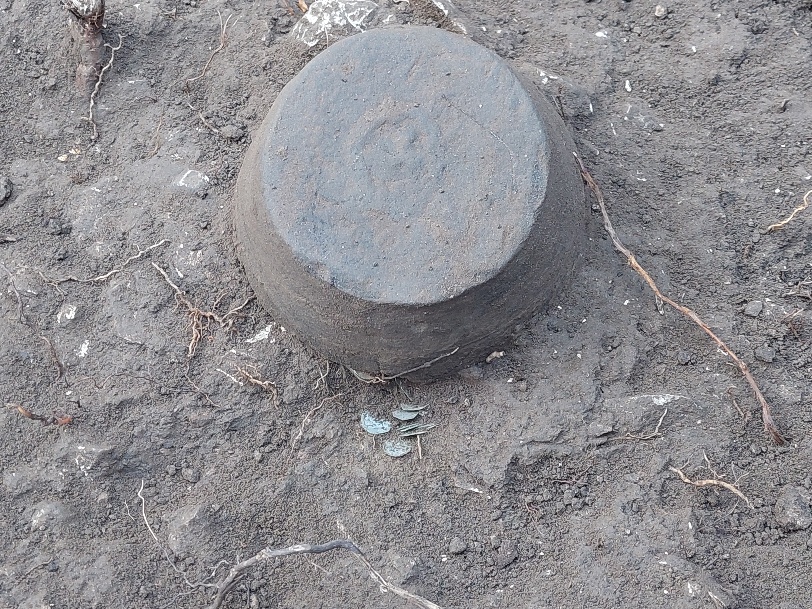
Over the past year, the numismatic collection of the King Saint Stephen Museum has been enriched with several thousand coins from archaeological periods and two coin hoards. Among the coin finds unearthed during metal detecting surveys and excavations, we would like to present the 13th-century coin hoard consisting of 779 silver coins discovered in the autumn of 2024 at the Kincsesbánya – Vaskapu-hegy archaeological site.
In 2024, two metal detecting surveys were conducted at the site, during which forged iron nails, coins, belt buckles, a broken mace head, an arrowhead, a spur, an ox-head signet ring, and fittings were found. With the help of the Community Archaeological Program, the Vaskapu Castle Friends’ Circle, and the Kincsesbánya community, we cleared the area of shrubs and bushes, and after cleaning the area, we conducted our second survey. During the research, our volunteer Tamás Gaál discovered a hoard of coins consisting of Viennese, Hungarian coins with Viennese designs, and Slavonian ban denarii. The Viennese coins date from the reign of Ottokar II (1251-1276), while the Hungarian coins date from the reigns of Béla IV (1235-1270), Stephen V (1270-1272), and Ladislaus IV (1272-1290).
In our presentation, we will describe the composition of the coin collection in detail, examine the reasons for the presence of the Viennese denars, and seek an explanation for the fact that the Hungarian coins were minted in the same period as the Viennese coins. Due to the composition of the coin hoard found in Kincsesbánya, it is also suitable for examining the relative chronology of Viennese denarii, as the Viennese coinage associated with Ladislaus IV and the Slavonian ban denarii found in it make this possible. Last but not least, in our presentation we also seek to answer the question of whether the fact that the Kincsesbánya coin hoard remained in the ground, or was possibly hidden, because of the second Tatar invasion of 1285, or whether it is more likely to be related to some kind of local tyranny or natural cataclysm.
Eternal Portrait, Fleeting Paper: Queen Elizabeth II on Banknotes
Dombai István
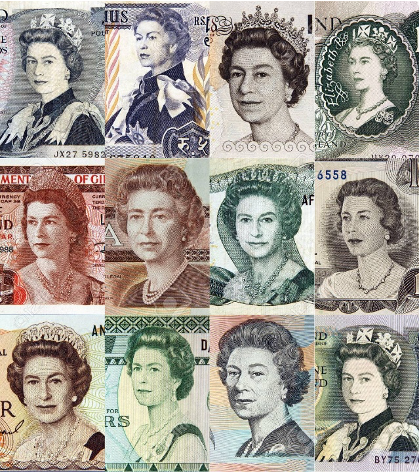
Banknotes are everyday tools, yet they also serve as carriers of visual communication and social memory. The portrait of Queen Elizabeth II (1926–2022) appeared on banknotes in numerous countries worldwide, making her one of the most frequently depicted monarchs of all time. This presentation examines how Her Majesty’s depiction evolved on banknotes, from childhood portraits to those of her later years. Over the decades, the images gradually became more realistic, alongside the introduction of modern security features such as watermarks, holograms, and polymer substrates. The portrait of Queen Elizabeth II on banknotes is not merely an image but also a symbol, visually reflecting each country’s relationship with the British monarchy. By selecting examples from banknotes across five continents, I illustrate how her portrait became a symbol of political loyalty, national identity, and historical continuity, and how an era concluded after 2022 as her image gradually gave way to that of King Charles III. Collecting banknotes featuring Queen Elizabeth II is a longstanding international tradition that unites collectors and enjoys particular respect within the numismatic community. Studying and collecting these notes offers both professional challenges and aesthetic enjoyment, while also providing a direct encounter with history.
The construction of value through coined silver in Antiquity: the case of the Stăncuța hoard
Anca Dumitru
The paper is focused on how precious metal reserves in the form of coined currency were seen as a store of wealth, a cushion for hard times with little to no use on some local markets, although the images of power struck on them were of high interest.
During the 1st century BC there is a period of hybrid currencies in the pre-Roman polities ascribed to the sociocultural setting of Dacia. Both the late Hellenistic tetradrachms and the Roman denarii – whilst evidence for a regional trade network, took over a different role in the non-monetized local economy and the supply cut-off might have triggered the rise of local manufacturing.
In this line, the Stăncuța hoard is revealing. The silver deposit contained 34 Republican denarii (both authentic and imitations), 53 Thassian tetradrachms (mostly imitations, a few originals and a few explicitly minted under the Roman authority), and two silver ingots. One denarius, one tetradrachm, and one silver bar were made of the same silver, henceforth it is very likely that if recovered, the tetradrachms and maybe the silver ingots too would have been melted and reminted as denarii. It is an illustrative case of how assets kept in the form of money were converted into a more profitable design. The ‘ROMA’ logo truly did its job: the silver currency struck with this political emblem was more serviceable than any other coinage of the time.
Hitler’s coin collection / The „Sonderauftrag Münzkabinett”
Justus Düren
In 1942 Adolf Hitler appointed Fritz Dworschak, director of the Kunsthistorisches Museum in Vienna, to establish a coin cabinet for the planned Linz museum. Known as the “Sonderauftrag Münzen,” the project lasted until May 1945. Its aim was to centralize and reorganize looted and confiscated collections under Führer authority. Many holdings were seized: 13 Austrian monastery collections and major Jewish-owned collections in Vienna, expropriated under Nazi persecution. Further acquisitions came from the art market. The total volume is difficult to determine, but research indicates that almost half a million objects—including coins, paper money, and books—were integrated into the project. Administration was based in the Vienna Coin Cabinet, while work and storage shifted from Kremsmünster Abbey to Hohenfurth and finally to the Aussee salt mine. In 1945 the U.S. Army recovered the crates and moved them to the Munich Central Collecting Point, where Austrian holdings were identified and gradually restituted. This lecture, however, highlights not the bureaucratic organization but the provenance of these looted collections and their postwar trajectories. It will show in detail how the individual collections were obtained, what was confiscated, what was purchased, and what constituted the highlights of the plundered holdings.
The Buda Mint and issues surrounding its autonomous coinage
Gálvölgyi Orsolya
The first charter referring to the operation of the mint dates from 1255. Following this, it became the most important mint of the medieval kingdom, serving as a model for other mints across the country. The last comprehensive study on coin minting in Buda was published by Lajos Huszár in 1958. Even this book demonstrated clearly that the history of the Buda mint is complex and cannot be studied without interdisciplinary research, as evidence has often survived only sporadically or indirectly. Often, it is the coins themselves that serve as evidence. A good example is the autonomous minting in Buda under the Anjou rulers. Although no written sources survive, several coin types feature iconographic and epigraphic elements closely associated with Buda. These coin types are rather rare in the archaeological record. They are found primarily in the immediate vicinity of the mint itself. However, research is complicated by the fact that these coins often remain unpublished. In my presentation, I aim to trace the development of the Buda mint from its beginnings through its rise under the Anjou dynasty, with particular attention to the possibility of autonomous coinage. This issue will be examined through western analogies and local written sources, focusing on the operation of the mint, the coin types associated with autonomous coinage, and their occurrence in the Hungarian archaeological record. My goal is to provide a synthesizing overview of the Buda mint in the first half of the 14th century, building on the current state of numismatic research.
The Kremnica Mint in 1945–1946
Vojtech Hami
This presentation examines the operation of the Kremnica Mint in the years 1945–1946, with particular emphasis on its production program and the process of postwar transformation. During the existence of the wartime Slovak Republic (1939–1945), the Mint was responsible for the production of circulation coinage, badges, decorations, medals, and insignia. Following the end of the Second World War and the restoration of the Czechoslovak Republic, its activities became focused primarily on the manufacture of decorations, badges, and commemorative medals.
The analysis draws on archival records preserved in the Corporate Archive of the Kremnica Mint, specifically the fond Kremnica Mint (1328) 1630–2014. These sources provide a basis for reconstructing the day-to-day functioning of the enterprise during a period marked by severe challenges, including shortages of supplies, understaffing, damaged infrastructure, and delays in the delivery of finished products.
Particular attention is devoted to the Mint’s relationship with state authorities—especially the Ministry of National Defense of the Czechoslovak Republic—as well as to its competitive struggle with the Prague firm Karnet a Kyselý, which proved more responsive to customer demands. Presentation demonstrates that, despite numerous difficulties, the production of the Kremnica Mint constituted an important component of postwar recovery and, at the same time, illustrates the continuity of operations at one of the oldest mints in Europe.
Traces of regional currency use during the Mongol invasion and the Battle of Mohács
Dr. Nagy Balázs
What these two periods have in common is that, in light of the events of a given year, we can see traces of the military forces that ravaged Hungary. Knowledge of historical events and archaeological finds provide a sharp cross-section of the currencies used in each period. Coin and treasure finds are time capsules that carry a message about the use of money in that era. Although applied numismatics and archaeology require a specific classification of coin collections, the known examples show that a separate analysis of hoards and purse finds is unnecessary.
Although the methodology of this presentation is unusual due to its selectivity, the joint evaluation of the two examples does not require any special explanation. In connection with coin collections related to the Mongol invasion, it is typically worth observing the regional circulation of two denominations, the bracteate and the denarius, whose geographical concentration may provide answers to questions such as who issued the coins and what may have been the primary reason for their appearance. The destructive events of the Mongol invasion affected the Great Plain and Transdanubia just as much as the Ottoman-Turkish army did during the Mohács disaster. The answers to the questions posed above may also be relevant in connecting the two periods. In 1521, the king ordered a devaluation of the currency. Thus, during the disaster at Mohács, both devalued and valuable coins were in circulation, and their mass circulation can be traced to a specific geographical area, similar to the time of the Mongol invasion. In this presentation, we will attempt to explore the possible reasons for the identical geographical distribution of coin collections from these two periods.
Gods, Family Members, Power: Iconography and Propaganda on Coins of the Early Empire Period
Németh Roland
This presentation examines the role of coinage as a medium of imperial communication in the Early Roman Empire. Coins were not merely instruments of economic exchange but also powerful carriers of iconography and propaganda. By analyzing representations of gods, members of the imperial family, and symbols of power, the study explores how coin imagery contributed to legitimizing imperial authority and shaping collective identity. Divine associations emphasized the emperor’s favor with the gods, dynastic portraits highlighted continuity and succession, while depictions of victory, peace, and abundance projected the stability and prosperity ensured by imperial rule.
Building on this foundation, in my presentation I analyze the portrayal of the early Roman imperial family on coins through the lens of ancient narratives. It will examine how the depiction and promotion of family members on coinage compare to their representation in the testimonies of Roman historians. While scholarship has traditionally focused on the succession policy of Augustus, this study concentrates on the imperial family during the reigns of his immediate successors – Tiberius, Caligula, and Claudius. Finally, the presentation will discuss the interpretation, meaning, and societal impact of these symbols from the perspective of the early imperial period (Julio-Claudian dynasty, 1st century AD). Through this approach, it aims to illuminate the complex interplay between religion, family, and authority in constructing and maintaining the ideology of Roman imperial power.
In 2025, Hungary celebrates the 700th anniversary of its gold coinage
Dr. Novák Ádám
On this occasion, the Déri Museum has organized a temporary exhibition entitled The Path of Gold, based on its outstanding numismatic collection. I participated in the preparation of this exhibition as a professional collaborator. During the work, we systematically processed the museum’s gold holdings, and the idea emerged to compile a complete catalogue of its gold florins.
In my earlier research I had already dealt with several Hungarian gold florins outside the Déri Frigyes Numismatic Collection. Building on this experience, I have now extended the scope of the project—together with colleagues—to the entire collection of approximately 230 specimens.
In my presentation, I will introduce some of the most remarkable pieces of the collection, highlighting their artistic, historical, and numismatic significance. In selected cases, I will also provide short collection-history sketches, tracing how individual coins entered the museum holdings and how they reflect broader patterns of collecting and heritage preservation.
This work not only contributes to the scholarly documentation of one of Hungary’s most important gold coin collections, but also situates the Déri Museum’s holdings within the wider European and Hungarian numismatic tradition.
In the shadow of the Mongol invasion – numismatic significance of the treasure find of Ceglédbercel
Rácz Laura
My presentation will focus on the treasure find from the Mongol invasion period of Ceglédbercel, a collection of artifacts from Pest County that was newly discovered in 2021. Following excavation, a total of 121 Friesach denarii and two worn ring jewels were added to this treasure hoard. The significance of this lies in the fact that the coins and treasure troves associated with it provide a fairly good snapshot of the years of Mongol invasion.
Treasure finds are constantly being unearthed, with an estimated 150 examples across the country, but who knows how many more lie buried in the ground. Researchers have already placed great emphasis on interpreting this horizon of finds as thoroughly as possible, drawing conclusions about, among other things the monetary circulation of the period, the economic situation of those who hid the treasures, and possibly the routes taken by the Tatar armies.
Furthermore, in order to place this specific collection of finds in context of the Hungarian Kingdom as a whole, I compare it with the already published coin and treasure finds from a smaller region, the Middle Danube region. I chose this area, among other reasons, because it was a very important center for economic, merchant, religious, and political activities. Also, the Danube River divides the landscape into two parts, allowing us to examine issues related to the destruction on both sides of the river.
Exploring a Collector’s Network: Frigyes Déri and His Numismatic Purchase Log
Sajtos Anna
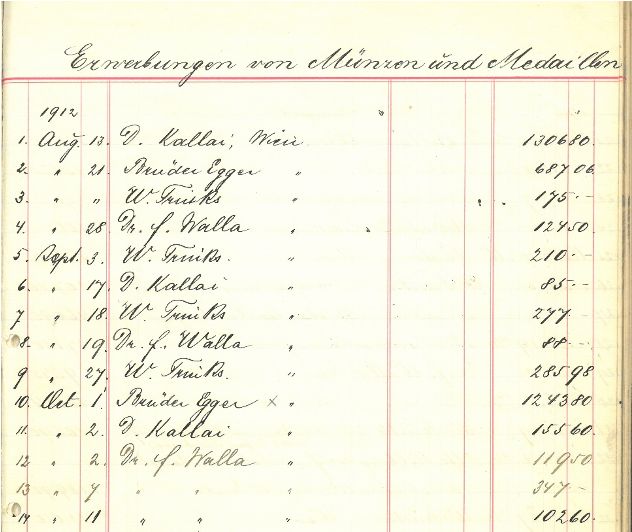
Frigyes Déri was one of the most successful textile industrialists of the Austro-Hungarian Monarchy, and at the turn of the century he too was swept up by the passion for art collecting and he became one of the most significant Hungarian private collectors at the beginning of the twentieth century. When creating his numismatic collection, his goal was to present all periods of Hungarian monetary history as comprehensively as possible. However, his collection preserves not only objects of historical importance but also the imprint of a passionate collector’s life.
The purchase log he kept—now preserved in the Déri Museum—offers a rare glimpse into a collector’s way of life. The log records numismatic acquisitions separately from other artefacts, and its data make it possible to reconstruct at least partially Déri’s network of business contacts. Alongside well-known Viennese coin dealers, German and French merchants—such as Otto Helbing, Leo Hamburger and Étienne Bourgey—also appear among the sellers. In addition to items obtained at auctions and through their shops, Déri also purchased pieces from other private collections. The presentation introduces the structure and content of the purchase log and illustrates how the entries reveal the network of dealers and collectors through which Frigyes Déri built his numismatic collection. It also presents selected coins and medals from the Déri Museum whose acquisition sources can be identified on the basis of the log’s data.
The Jászjákóhalma – Négyszállási-tó coin hoard
Steuer István
On July 21, 2023, volunteers from the Jász Museum conducted a metal detector survey on the outskirts of Jászjákóhalma, in the vicinity of a long-known Árpád-era site. Based on documentary evidence, on the western outskirts of a settlement identified as Százd, where only a few scattered pieces of pottery marked the site in the plowed field, the metal detectors suddenly began to beep in the hands of the Jászkakasok. The finds were coins, and it soon became clear that we had managed to excavate dozens of pieces of a hoard on that memorable day. The find unearthed near the Jászjákóhalma – Négyszállási lake is incomplete for the time being, although we searched for the center of the scatter during a rescue excavation, we did not find the nest of the find. We are certain that there are more coins hidden under the relatively large search area, but we still consider the discovery important due to its unique composition. The coin find includes early Friesach and Hungarian denarii from the early 12th century, denarii issued by Béla III at the end of the 12th century, and Byzantine gold coins from the end of the 11th century. We trust that the publication of this find will contribute to a better understanding of monetary circulation in the Árpád era.
The diligent explorer of hungarian numismatics – the life and work of József Weszerle
Szabó Kristóf
The central theme of my presentation is the life and work of József Weszerle, a Hungarian historian, academic lecturer, and professor of numismatics. His main activity dates back to the first half of the 19th century.
József Weszerle was born in Upper Hungary, historically the northern part of the Kingdom of Hungary. He completed his education in the Royal University of Pest, where he later became a professor and lived until his last days.
The title of my research refers to the character and work ethic of József Weszerle. He devoted his life to his family, his university, and numismatics.
István Schönwisner was a prominent figure in the early days of Hungarian numismatic research. Following in his footsteps, József Weszerle sought to summarize and synthesize the burgeoning numismatic research, a task made possible in part by István Schönwisner’s work.
Unfortunately, he was unable to achieve his goal, as his untimely death prevented the completion of his life’s work. His only work published in print, posthumously: his leftover numismatic plates.
His left-behind, unfinished, handwritten numismatic works, notes, collected information and data are still unpublished, and can be found in the Coin Collection of the Hungarian National Museum.
As Ödön Gohl once wrote: „ …, with Weszerle’s death, fate set back the Hungarian numismatics with half a century, …” This presentation centers on the numismatic heritage of József Weszerle, his life, and unfinished works. In my research I want to highlight the significance of Weszerle’s works for Hungarian numismatics and the opportunities that remain in his work.
Real competition or social exclusion? The motivation behind the awarding of merit medals at the Jesuit High School in Kalocsa
Dr. Szabó Róbert
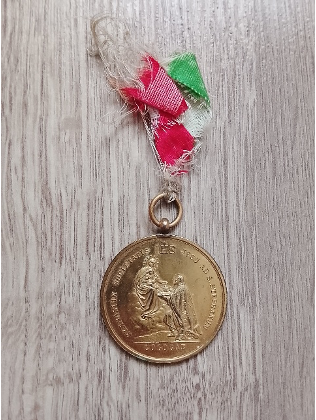
As I have pointed out in my previous publications, great emphasis was placed on rewards at the former Jesuit high schools in Hungary (Kalocsa, Pécs). The monks considered this to be one of the main motivations for competition, and they discussed it repeatedly in writings and treatises on local education. Given that the names of those rewarded by teachers are available, this makes it possible to examine the issue of rewards from a social history perspective through numismatics in an almost unique way.
In my presentation, I will examine the social background of the students who were top of their class (who won gold medals) at the Gymnasium in Kalocsa. My goal is to answer the question of to what extent the students’ origins influenced the rewards they received. Since the Jesuit era spans more than 80 years, I identify nearly one thousand students in my research. I use school reports, registers, and graduation registers as sources. These contain the names of the top students in each class and the most important information about their social background (religion, place and date of birth, place of residence, parents’ occupation).
Methods of Coin Forgery and Their Detection
Dr. univ. Takács József
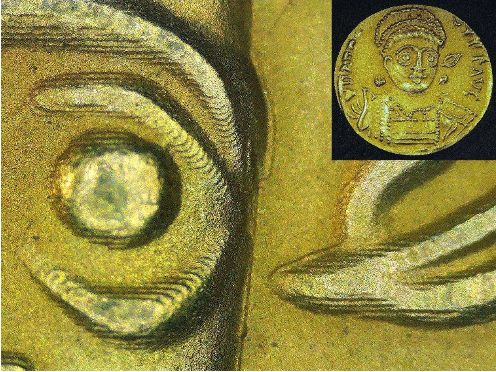
The appearance of forgeries is as old as coinage itself. Archaeological research has identified traces of counterfeiting in numerous excavations, even though coin forgery was severely punished. The counterfeit coins were usually made of cheaper metals or alloys, as this made the practice profitable. The production methods reflected the technical level of the given era. Techniques included plating, artificial aging (antiquing), the application of thin precious metal foils, and fire gilding.
Today, the market offers counterfeit coins and imitations—elegantly termed replicas—from all ages and regions, often available at low prices. Hungarian coins are no exception among the reproductions.
The materials used in counterfeit coins today are still typically copper alloys or iron alloys, but tungsten carbide, zinc alloys (such as zamak), tin, nickel, and aluminum may also be employed. For surface treatment, antiquing is common for copper and silver pieces. Electroplating may involve bronzing, silvering, or gilding, while for iron alloys, a newer method—IP vacuum plating—has been developed. Metallic paints, applied with oil- or resin-based binders, are also encountered.
Counterfeits are produced using a variety of methods. Among these are to mint a copy of a coin, where dies may be prepared in the traditional way or, more recently, by laser engraving. In casting, sand casting and precision lost-wax casting are most commonly employed. Each of these techniques and their limitations leave different traces on the coins, and by examining these characteristics, forgeries can be identified.
Modern Counterfeits of Medieval Moldavian Coinage: The Case of a Hoard after Stephen the Great
Dr. Cristiana Tătaru – Dr. Gabriel Custurea
The reign of Stephen the Great (1467–1504) is widely regarded as one of the most prosperous and stable periods in the history of medieval Moldavia. Over the course of his 38-year rule, the principality experienced notable economic growth, significant military successes against the Ottoman Empire, and a marked cultural renaissance. Nevertheless, numismatic evidence from this era remains relatively scarce. Coins attributed to Stephen the Great—particularly the groschen and half groschen—are among the rarest issues in Eastern Europe. To date, only three small hoards and a limited number of specimens from urban settlements within the territory of historical Moldavia have been documented.
In recent decades, the antiquities market has seen an influx of counterfeit medieval coins attributed to Wallachian princes. It is therefore unsurprising that a privately held hoard has emerged containing 74 modern forged specimens imitating the groschen and half groschen minted during Stephen the Great’s reign. The purpose of this study is to examine the principal characteristics of these modern forgeries, which continue to circulate on the market today.
Coin hoards from the early modern and modern periods in Somogy county
Varga Máté
I have previously compiled a summary of medieval and early modern coin hoards in Somogy county, i.e. those that can be classified as belonging to the archaeological period (up to 1711). However, we know very little about coin hoards after 1711, even though quite a few have been discovered in the county. Often, only a database entry or a short newspaper article remains about them. There are some about which we know only that they are coin hoard from the time of Joseph II. Fortunately, however, we have a detailed list of most of the finds. Nine coin hoards were hidden in the 18th century, three in the 19th century, and another three in the 20th century. Thus, I would like to briefly present a total of 15 coin hoards in this lecture.
Discovery of a Golden Horde Copper Coin in South-Eastern Hungary
Dr. Dmytro Yanov – Fülöp Máté
The numismatic collection of the Munkácsy Mihály Museum in Békéscsaba contains a coin of the Golden Horde, discovered in 2023 near the village of Kevermes, Békés County, by a metal detectorist working for the Museum.
The copper coin (pūl) is an anonymous issue. The obverse bears the Old Uyghur inscription kutluğ bolsun (“be blessed”), and the reverse – a tamgha with the date 69(0) below. Around the tamgha are ornamental elements or possibly an undeciphered legend. Although the coin features the date 690 AH (1291 AD), it might be dated to the entire reign of Khan Toqta (1291–1312/13).
Based on parallels from known finds, this type was minted in the western periphery of the Golden Horde, in the Prut–Dniester region. A. Crivenco and E. Goncharov suggest that it could have been minted in the Golden Horde city located near the village of Costești, Ialoveni District, Republic of Moldova, as most known finds of this type came from that site. Although this copper pūl would not have circulated as legal tender in the Kingdom of Hungary, such a find suggests the possibility of trade or other contactsbetween the population of the Békés region, where the presence of Cumans has been documented, and the Prut–Dniester region. The fact that the coin was perforated suggests that it may have been repurposed as a decoration.